Showing posts with label value. Show all posts

Wednesday, 27 July 2016

All publicity is good - right?


Recently there has been a couple of articles about D&T, and whilst its great to see D&T getting a mention after much sidelining (and ignorance) from the media, I do have some reservations.

Last year I wrote an article for The Conversation about the ongoing decline in GCSE D&T entries, which Ross McGill (@TeacherToolkit) eloquently follows up this year highlighting the further decline in numbers. Unfortunately the Schools Week headline misrepresents Ross’ arguments but Ross swiftly corrects in the ‘comments’ section.

Steve Parkinson (@iamparksy), new Assistant Head at UTC Leeds and D&T teacher, explains the five changes to the GCSE D&T: contexts not briefs, appropriate materials not silos, emerging technologies (great blogging by David Barlex and Torbeen Steeg about these), iterative design and equal balance between exam and NEA. Perfectly summarised by Steve. Good D&T teachers and departments will have been doing the first four of these for years.

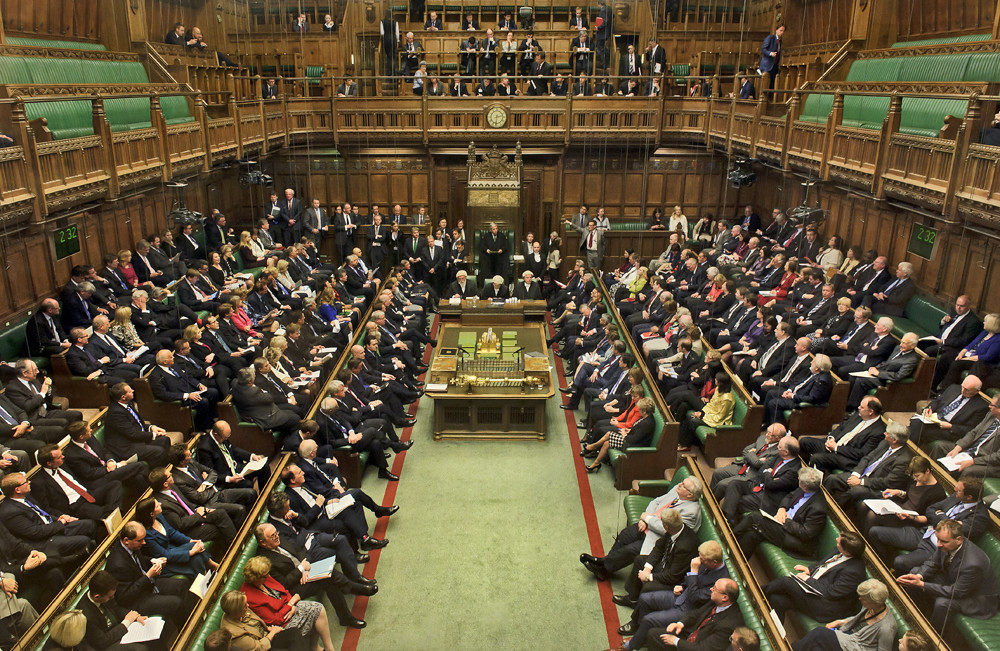
But it is yesterday’s article that set my alarm bells ringing: 87 MPs demand inclusion of subject in EBacc as a science option. And this makes me twitch for two reasons.

Firstly D&T is not a science subject (nor an art subject for that matter). Whilst this confuses some who want to pigeon-hole knowledge into disciplines, in my opinion it is a strength of D&T. It is a subject that draws on other subjects disciplinary knowledge and uses it to inform design thinking, the appropriate selection materials and understanding contexts, as well as enabling us to consider how and why we might make use of emerging technologies. 

Secondly the letter claims that ‘bolstering the Design and Technology GCSE with inclusion in the EBacc [would be] an important step towards addressing the skills shortage’ - really? This causal link between D&T (and its earlier subject forms),  science and IT has been repeatedly made since the 1962 Crowther Report and Harold Wilson’s technological revolution speech in 1964 (MacCulloch, Jenkins and Layton 1985) yet in all of my literature searching for my PhD I have yet to find any empirical evidence for this. This is not say that there is no correlation (easier to claim than causation) but the MPs claim puts D&T in a conundrum - is GCSE D&T part of a broad and balanced curriculum for all pupils? Or is it a specialist qualification for those who want to work in design, manufacturing and engineering industries. 

Whilst considering the MPs letter it is important to remember why the Ebacc exists - three reasons were given but the one relevant here is that the Ebacc gives all pupils access to a broad and academic curriculum (Education Select Committee 2011). The five ‘subjects’ have been set put as providing the essential knowledge all pupils need a part of a general education - an education for all. But the letter justifies GCSE D&T being part of the Ebacc because it will address a skills gap in 'design, manufacturing and engineering’ industries. The implicit argument for GCSE D&T's inclusion is that it will equip young people for jobs in these industries. But not all pupils want to work in these industries, nor does the UK need them to. Therefore the argument for including D&T in the Ebacc is that it is a ‘specialist’ qualification - for some not for all - which is not what the Ebacc is set up to do.

In my view GCSE D&T cannot do both and be in the Ebacc. For me D&T is an essential part of a broad and balanced curriculum for all pupils, some of whom may go on to D&T-related occupations. Before we get to excited about the (remote) possibility of GCSE D&T in the Ebac we need to decide and agree what the purpose of D&T is. Maybe this could be a start for the discussion:

D&T’s unique contribution to pupils’ learning is developing their ‘capability to operate effectively and creatively in the made world’ (Parkes Report 1988, p.3)

or you might find this blogpost a useful starting point: What's the point of D&T?


References

Department for Education and Science and the Welsh Office, 1988. National Curriculum Design and Technology Working Group Interim Report [The Parkes Report]. London: DES.

Education Select Committee, 2011.  The English Baccalaureate. London: House of Commons

McCulloch, G., Jenkins, E.W. and Layton, D., 1985. Technological revolution?: The politics of school science and technology in England and Wales since 1945. Routledge.

Wednesday, 4 November 2015

D&T in schools: its value to children today and tomorrow


Yesterday’s Ebacc announcement from Nicky Morgan could be seen as another nail in the coffin for design and technology (D&T); on top of the reducing budgets, teacher recruitment crisis and changing exam specifications this means that D&T teachers are having to defend their subject to parents, pupils, head teachers and MPs.

So why is D&T an essential part of a broad and balanced curriculum?

This seems a simple opening question to ask new trainee teachers, but it is less straightforward to answer. Even in official documents and within the D&T community there is disagreement and contention. I’ve come to the conclusion that these different perspectives about the value of D&T are part of the subject’s vibrancy, but we need to harness them into a cohesive structure that defines the value of D&T.

Defending D&T

Over the past two years I’ve interviewed people about why they think D&T is a valuable school subject. In my initial study I talked with D&T teacher trainers (people like me) and trainee D&T teachers, and from these two groups I was able to integrate their values into a list of 22 different values of D&T (in the table below).

The two groups agreed that D&T is a subject that can be of value to an individual child whilst in school and studying D&T, and when they leave school. But they also said that D&T is of value to society.

In the table I’ve split the values into two types and compared which values each group had. The two types are:
·       the value to children whilst they are at school
·       the value to children and society outside (and after) school.

I’m not claiming these values are the definitive values of D&T but they do show the variety of values people have of D&T. It also shows the different values just two groups have of D&T.


Values
D&T teacher educators
Trainees

The value of D&T for children whilst they are at school
  
1
Activity of designing
✓

2
Alternative to academic subjects

✓
3
Designing for future needs and opportunities
✓
✓
4
Examination and questioning of the made world

✓
5
Freedom to take risks and experiment
✓
✓
6
Helps the understanding of human beings' position & existence
✓
✓
7
Identifying problems to be solved
✓

8
It is fun and enjoyable

✓
9
Learn from evaluating personal success and failure
✓
✓
10
Learning happens through using brains and hands together
✓
✓
11
Meaningful activity of solving real problems with real solutions
✓
✓
12
Personal ownership of decisions and actions
✓
✓
13
Provides a practical purpose for other school subjects

✓
14
Using raw materials to make a product
✓
✓

The value of D&T to children (and society) outside school and when they have left school 

15
Become aware of the economic impact of technological developments
✓
✓
16
Considers the ethics of technological development
✓
✓
17
Contributes to the nation's industrial and economic competitiveness

✓
18
Develops the skill of creativity
✓
✓
19
Develops the skills of autonomy and collaboration

✓
20
Empowers society to act to improve the world
✓
✓
21
Learn practical life skills

✓
22
Learning of vocational skills and techniques that open doors to careers
✓
✓
Table 1: Comparing values of D&T teacher educators and trainee teachers by type

Using these values to defend D&T

Steve Keirl (2007) reminds us that ‘D&T teachers periodically find themselves offering some sort of defence of the subject’ (p.550) - my research could help D&T teachers, and its many advocates, celebrate D&T’s strength and defend its contribution to a school’s curriculum.

As D&T implements changes to the curriculum, GCSE and A level, I think it is important that we have continue to debate the value of D&T. This series of values could form part of that discussion and provide a framework for that debate.

In D&T departments each teacher could rate these values in order of importance and compare. Departments could discuss their agreements and disagreements. Further conversations could ask ‘How do pupils know why we think is important?’ ‘How do we show our values of D&T in our lessons? School senior leaders could also join in the discussion, comparing their values with the D&T teachers.

By understanding the values held about D&T by different groups of people, such as parents and senior leaders, we may come to a collective understanding about the many reasons why D&T should be taught in schools.

This series of values does have a limitation; currently it only represents the values of the two groups discussed here. The next version will include the opinions of others including pupils, D&T teachers, school senior leaders and parents.

References

Keirl, S., 2007. The politics of technology curriculum. In: D.Barlex, ed., Design and technology for the next generation. Whitchurch, England: Cliffeco Communications, pp. 60-73

This blog post is a shortened version of an article in Design and Technology Education: An International Journal –